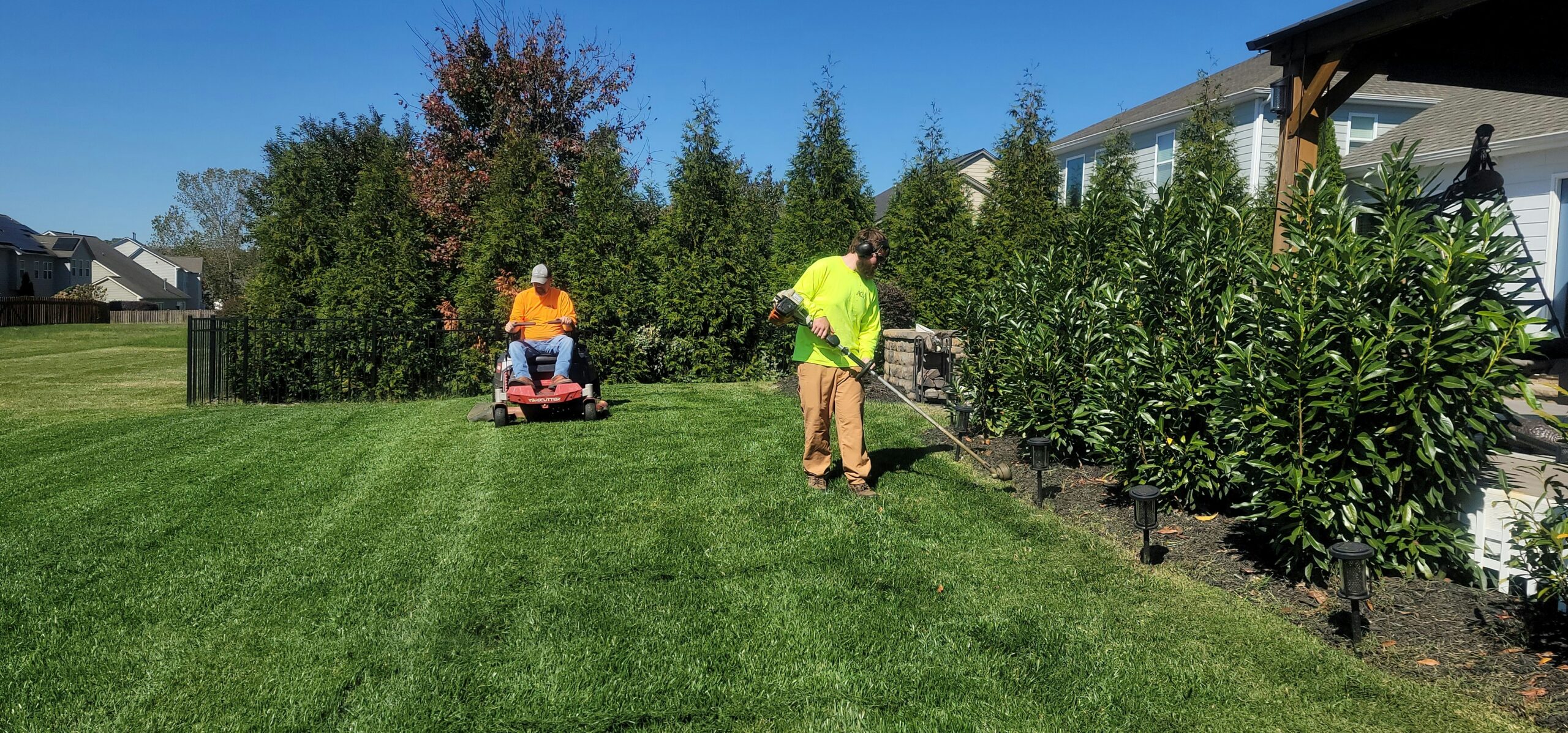
Landscapers and horticultural workers are at risk of injury from a wide assortment of possible hazards in this trade.
A fall, or trip over an uneven surface, can happen to most of us at any time. A brief lapse of attention, thinking about something other than what’s at hand, a distraction by a co-worker or a phone call can end in a slip, trip or fall. Such accidents can lead to a variety of undesirable consequences ranging from a simple bruised shin to an extremely serious injury. In fact, these types of events cause 15 percent of all accidental deaths and thousands of serious injuries each year. Most can be prevented.
Here are safety practices to help avoid slips, trips and falls.
Walking & Working Surfaces
- Wear boots that have good traction. Inspect footwear and replace shoes when the sole has a smooth area larger than two pennies.
- Wet grass and clippings can be slick, so slow down on muddy or uneven terrain. For steep slopes, walk sideways to improve traction.
- If applying liquids, watch for wet areas, and do not run.
- Constantly look for hazards such as holes in the ground, bumps or unexpected changes in the terrain. If at the site for the first time, walk the grounds to note any objects – such as utilities, stumps, holes, etc. that could cause someone to trip or damage the equipment. Notify other crew members of fall hazards identified.
- Clean up spills immediately and mark off the area until it is dry.
- Keep cords and other clutter away from walkways. If a piece of equipment is not being used, wrap up the cord neatly and place it out of the way. When in the office, secure cords with tape or cord strips.
- When carrying large objects, have another crew member help point out obstacles, such as elevation changes, steps or new surfaces. Hold the object to the side so you can better see where you’re walking.
- Look for icy patches when working in temperatures below 32 degrees Fahrenheit. Hold onto the equipment if entering/exiting around snow or ice.
Three Points of Contact
Three points of contact means you are using two hands and one foot, or one hand and two feet, to support your body while mounting or dismounting a vehicle, piece of equipment, or ladder. The three points of contact should only be broken after you reach your destination (the ground, vehicle or equipment cab, stable platform, etc.).
- Dry your hands and wipe excess mud, grass or snow off your boots for better grip.
- Face the vehicle, equipment or ladder when you enter or exit.
- Keep your hands free. If you need to bring tools or materials up with you, place them in a tool belt or use a hoist line for larger items. If you’re climbing down from a vehicle, put the tool or other item on the floor and then grab it when you are on the ground.
- Do not use a tire as a ladder. Enter the vehicle how the manufacturer intended. Do not reach for the steering wheel to pull yourself up.
- Do not jump from a machine or vehicle to the ground.
- Do not try to enter a piece of equipment or vehicle that is moving.
- Check for obstacles, debris or fluids on the ground before dismounting.
- Do not wear loose clothing or dangling jewelry that could catch on something.
Ladders & Stepladders
- Read and follow the manufacturer’s instructions label affixed to the ladder if you are unsure how to use it.
- Inspect the ladder prior to use.
- Do not use ladders that have loose rungs, cracked or split side rails, missing rubber footpads or are otherwise visibly damaged.
- Keep ladder rungs clean and free of grease. Remove buildup of material such as dirt or mud.
- Do not place ladders in passageways or doorways without posting warning signs or cones that detour pedestrian traffic away from the area. Lock the doorway that you are blocking so it cannot be opened into you.
- Do not place a ladder at a blind corner or doorway without diverting foot traffic by blocking or roping off the area.
- Do not place ladders in areas with equipment or vehicle traffic.
- Only one person on the ladder at a time.
- Always face the ladder when climbing up or down it.
- Maintain three points of contact when climbing up or down the ladder.
- Never carry items in your hand when climbing up or down a ladder.
- When performing work from a ladder, face the ladder and do not lean backward or sideways from the ladder. Do not jump from ladders or step stools.
- Do not stand on tables, chairs, boxes or other improvised climbing devices to reach high places. Use a ladder or stepstool.
- Do not stand on the top two rungs of any ladder.
- Do not stand on a ladder that wobbles, or that leans left or right.
- When using a straight or extension ladder, extend the top of the ladder at least three feet above the edge of the landing.
The information contained in this article has been obtained from sources believed to be reliable. The information is general in nature and may not apply to all circumstances. Farm Family, its affiliates, agents and employees do not guarantee the accuracy or completeness of the information provided and assume no liability, expressed or implied, in connection therewith.